Puppy: The All-Caps Display Typeface for Bold Branding
Every project has a voice, and sometimes that voice needs to shout from the rooftops. You’re designing a logo for a new streetwear brand, laying out a poster for a music festival, or creating social media graphics that need to stop the endless scroll. In these moments, a quiet, understated serif font or a standard sans serif just won’t cut it. You need a typeface with presence, one that commands attention and makes a statement before a single word is even read. This is the exact space where a powerful display font like Puppy thrives, offering a solution for creators who want to inject pure, unapologetic personality into their work.
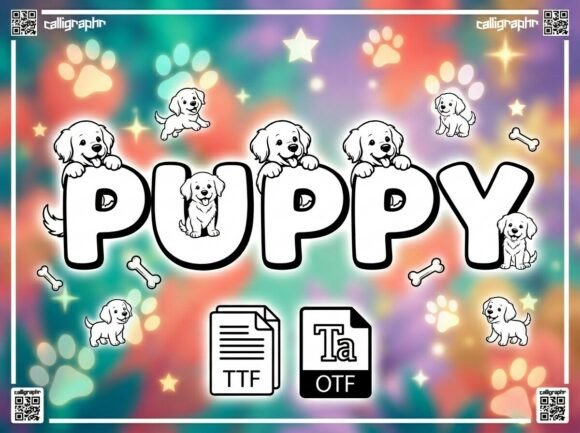
Puppy is a decorative display typeface designed with a singular purpose: to be the visual centerpiece. Its character forms are crafted with unique artistic flourishes and a strong, almost architectural personality. Think of it not as a tool for body text, but as a piece of art for your headlines, logos, and decorative initials. The design balances its creative flair with a polished, professional finish, ensuring it feels intentional and high-quality rather than chaotic. It’s a premium font asset built for high-impact moments where visual consistency and brand recognition are paramount.
A Typeface with Unmistakable Character
What makes a font like Puppy visually compelling? It’s the details. The letterforms likely feature unconventional shapes, interesting ligatures, or stylistic alternates that give it a custom, handcrafted feel. This isn’t a generic typeface you’ll see everywhere; it’s a tool for differentiation. For a small business owner or entrepreneur, this distinctiveness is invaluable. When your brand’s typography is memorable, it becomes a key part of your identity. Imagine seeing the Puppy typeface on a coffee bag, a music album cover, or a boutique clothing tag—it immediately sets a tone of creativity and boldness that generic fonts cannot match.
It’s crucial to understand its design intent. As an all-caps display typeface, Puppy does not include lowercase letters. This is a deliberate stylistic choice, reinforcing its role for headlines and logos where uniform capital letters create a powerful, cohesive visual rhythm. For body copy or long-form reading, you’ll need to pair it with a complementary serif, sans serif, or script font. This contrast is actually a strength, allowing you to build a dynamic typographic hierarchy where Puppy grabs attention and a more legible font carries the detailed information.
From Packaging to Digital Posts: Real-World Applications
The versatility of a strong display font lies in its ability to adapt across different mediums while maintaining its core identity. Puppy is a workhorse for creators in various fields. Its bold nature makes it perfect for:
- Logo Design & Brand Identity: Create a wordmark that is instantly recognizable. It’s ideal for brands in entertainment, fashion, food and beverage, or any sector wanting to project confidence and artistic flair.
- Packaging Design: On a shelf crowded with competitors, Puppy can make a product pop. Use it for the product name on labels, boxes, or wrappers to convey a sense of artisanal quality or modern edge.
- Marketing & Social Media: Craft eye-catching headlines for Instagram graphics, Facebook ads, or website banners. Its high-impact nature is perfect for announcing sales, launching new products, or promoting events.
- Print & Editorial: Use it for magazine covers, poster headlines, event invitations, or album artwork. It adds a layer of editorial sophistication and visual drama to any layout.
- Merchandise & Digital Products: Design t-shirts, tote bags, stickers, or digital planners and worksheets that stand out. The font’s strong personality translates well onto physical and digital goods.
For a content creator or blogger, using Puppy for featured image titles or chapter headings in a digital guide can dramatically improve audience engagement. It signals that the content is curated and intentional, elevating the perceived value of your work.
Practical Advice for Integrating a Bold Font into Your Workflow
Adopting a new typeface, especially one as distinctive as this, requires some strategic thinking. Here’s how to make the most of it.
Font Pairing is Everything. The key to using a decorative display font successfully is balance. Pair Puppy with a simple, neutral sans serif (like Montserrat or Lato) or a classic serif (like Georgia or Times New Roman) for body text. This creates a clear visual hierarchy: the display font for impact, the secondary font for readability. Test your pairings in context—see how they look together on a mockup website, a business card, or a social media post.
Context and Readability. Because it’s all-caps and highly stylized, avoid using Puppy for long sentences or small sizes. Its magic is lost when it’s forced to do the job of a text font. Use it for short, powerful statements: a brand name, a tagline, a single-word headline. Always consider the viewing environment—what looks stunning on a large poster might become illegible as a tiny website favicon.
Review the Included Files. When you acquire this font, you’ll typically receive OTF and TTF files. The OTF (OpenType Font) is the professional standard, offering the most advanced typographic features for software like Adobe Illustrator or InDesign. The TTF (TrueType Font) ensures universal compatibility across all devices and operating systems, which is essential if you’re sharing files with clients or using the font in basic design apps. Ensure your design software supports the file type you need.
Understand Licensing. This is a critical, often overlooked step. A commercial font comes with a license that dictates how you can use it. For any project that generates revenue—whether it’s a client logo, a product you sell, or a monetized blog—you must ensure you have the correct commercial license. This protects you legally and supports the type designers who create these valuable assets. Always read the license agreement before purchasing.
Ultimately, a font like Puppy is more than just a set of letters; it’s a design asset that can define a project’s mood. It’s for the designer who wants to break away from the ordinary, the entrepreneur building a standout brand, and the creator crafting visually compelling stories. By understanding its strengths and applying it thoughtfully, you can turn typography into one of your most powerful tools for communication and connection.