Whimsy Wiggle: A Playful Nod to Retro Charm
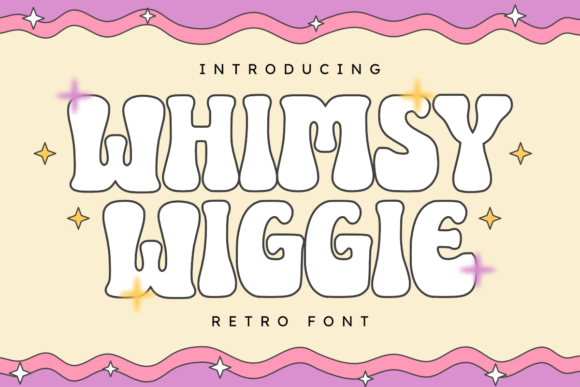
There’s something undeniably magnetic about a design that doesn’t take itself too seriously. It’s the kind of visual that makes you smile before you’ve even processed the message—a poster with a groovy, wavy headline, a logo that feels like a friendly handshake, or an invitation that promises a good time. Achieving that instant, joyful connection often comes down to a single, powerful choice: the typeface. Whimsy Wiggle is precisely that kind of choice, a display font that channels the free-spirited energy of 1970s graphic design through its signature wavy edges and playful, retro personality. It’s not just a set of letters; it’s a mood, a vibe, and a direct line to a sense of fun and nostalgia.
Capturing the Spirit of a Bygone Era
What makes a typeface like this so visually compelling? It’s all in the details. Whimsy Wiggle avoids the rigid, straight lines of modern sans serifs and the formality of classic serifs. Instead, each character has a soft, undulating form, as if the letters themselves are dancing. This creates an immediate sense of movement and energy. Think of the typography on vintage concert posters, psychedelic album covers, or the branding for old-school soda shops. That’s the territory Whimsy Wiggle inhabits. It’s a premium font that carries a specific emotional weight—it’s cheerful, approachable, and inherently creative. For a brand, this can be a shortcut to communicating a personality that is friendly, inventive, and slightly offbeat.
Where Playful Typography Truly Shines
The real value of a creative font like this is in its application. It’s a specialist tool, perfect for projects where capturing attention and evoking a specific feeling is more important than conveying dense information. Let’s break down where it can make the biggest impact.
Brand Identity & Logo Design: If your business is a bakery with a retro vibe, a boutique record store, a children’s music class, or a craft brewery with a fun, approachable brand, Whimsy Wiggle can become the cornerstone of your visual identity. Used in a logo, it instantly communicates your brand’s personality without a single word of explanation. It pairs wonderfully with a simple, clean sans serif for body text, creating a balanced and professional presentation that still bursts with character.
Packaging & Merchandise: On a shelf crowded with minimalist, stark designs, a product featuring wavy, whimsical typography stands out. Imagine this font on a bag of artisanal coffee, a jar of homemade jam, or the label for a craft soda. It suggests a product made with care and personality. The same principle applies to merchandise—t-shirts, tote bags, and stickers printed with a catchy phrase in Whimsy Wiggle become instant conversation starters, transforming customers into brand ambassadors.
Events & Marketing Collateral: Planning a music festival, a community fair, a themed party, or a creative workshop? This typeface is your best friend. It sets the tone on posters, flyers, and social media graphics long before the event details are read. For digital ads and email headers, it cuts through the noise of the feed, offering a burst of visual cheer that encourages engagement. It’s a powerful tool for any marketing campaign aiming for a youthful, energetic, or nostalgic audience.
Pairing and Practicality: Making It Work
A font this distinctive requires a thoughtful approach. Using it for long paragraphs of text would be a readability disaster; its power lies in strategic, impactful use. Think of it as the lead singer of your design’s band—it needs a solid rhythm section to support it.
The best practice is to pair Whimsy Wiggle with a highly legible, neutral font. A simple geometric sans serif like Montserrat or Poppins works beautifully, as does a clean, modern serif like Lora or Merriweather. The contrast ensures that your headlines and logos pop while your supporting text remains easy to read. Always test your font pairings. Place a headline in Whimsy Wiggle next to a sample of your body copy font. Does the overall look feel balanced? Does each font play its role without competing?
Consider the context of your project. For a website, you might use it for hero section headlines or special call-to-action buttons, but never for navigation or blog body text. In an editorial layout, it could be perfect for a chapter title or a pull quote in a lifestyle magazine. For print materials like business cards or letterheads, a subtle use in the header can add a memorable touch without sacrificing professionalism.
Beyond the Basics: Licensing and Versatility
When investing in a commercial font, it’s crucial to understand what you’re getting. Check the licensing terms carefully. A good premium font will offer clear, straightforward licenses for different uses—desktop for print and logos, web for websites, and sometimes an app or digital product license. This ensures you can use your new design asset confidently across all your projects, from your website to your printed packaging.
Don’t overlook the included font styles. Many display fonts like this come with alternates, ligatures, or swashes—extra characters that can add even more flair and customization to your designs. Exploring these features allows you to create truly unique typographic compositions that stand out. It’s these details that separate generic design from thoughtful, professional work.
Ultimately, choosing a font like Whimsy Wiggle is a strategic decision about visual communication. It’s for the designer, entrepreneur, or creator who wants to inject a project with unadulterated fun and a strong, retro-inspired identity. It won’t be the right fit for a law firm’s annual report, but for the right project, it’s not just a typeface—it’s the secret ingredient that makes your design feel alive, inviting, and impossible to ignore. It’s about building that instant, joyful connection with your audience, one wavy letter at a time.