When Your Design Needs to Yell: The Raw Power of Grunge Slab Serif
There’s a moment in every creative project where you hit a wall. You’ve tried the sleek sans-serifs, the elegant serifs, the friendly handwritten scripts, but nothing feels like it has enough weight. The design feels polite, perhaps even a little boring, but you need something that feels like it has lived a life. You need something with grit, history, and a voice that doesn’t just speak but roars. This is the exact space where a heavyweight typeface like Grunge Slab Serif enters the ring, offering a solution that is less about perfection and more about raw, unapologetic character.
More Than Just a Distressed Look
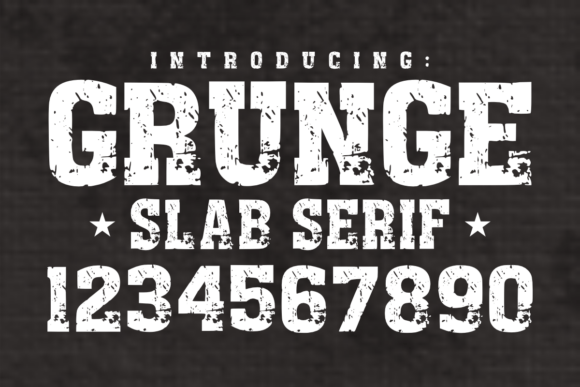
At first glance, you might categorize this simply as a "dirty" or "rough" font, but to do so is to miss the nuance. A true Grunge Slab Serif is an architectural marvel disguised as chaos. It combines the sturdy, blocky anatomy of traditional slab serifs—the kind you’d see on old wanted posters or industrial signage—with a high-detail distressed texture that mimics aged ink, rusted metal, or weathered concrete.
The appeal here is psychological as much as it is visual. In a digital landscape saturated with pixel-perfect, sterile minimalism, a font that shows its "wear" feels more human. It suggests authenticity, durability, and a story. For a brand, using this typeface is a visual shorthand for saying, "We are strong, we are established, and we aren't afraid to get our hands dirty." It’s a premium font choice for those who want to bypass the bland and go straight for the visceral.
Injecting Authority into Branding and Marketing
For entrepreneurs and small business owners, your brand identity is your handshake. If you are launching a craft brewery, a landscaping company, a construction firm, or an outdoor apparel line, you need a visual language that matches your physical output. A clean, geometric font might work for a tech startup, but it lacks the industrial grit required for rugged branding.
Imagine this font on a business card or a letterhead. It immediately sets a tone of authority. However, the real magic happens in high-impact headlines. Because the outlines of a well-designed Grunge Slab Serif are optimized for crisp printing, you don't lose legibility when you scale it up. In fact, scaling it up is where it thrives. It is the perfect candidate for:
- Hero Banners: Large-scale website headers that demand attention.
- Event Posters: Creating urgency and excitement for concerts, sales, or festivals.
- Packaging Design: Standing out on a crowded shelf, especially for products that emphasize heritage or craftsmanship.
- Social Media Graphics: Stopping the scroll with text that has texture and depth, rather than flat, standard digital fonts.
When you use a creative font like this for your marketing assets, you aren't just conveying information; you are conveying a mood. You are telling your audience that your message carries weight.
The Art of Typography Pairing
One of the most common mistakes in design is using a display font for everything. A Grunge Slab Serif is a powerhouse, but like a strong spice, it needs to be used with intention. If you use it for long paragraphs of body text, you will tire your reader’s eyes, and the intricate details of the texture may become muddy at smaller sizes.
The secret to professional presentation lies in font pairing. You need a partner that can balance the heavy, rugged energy of the slab serif. Consider pairing your Grunge font with:
- A Clean Sans Serif: Fonts like Helvetica, Open Sans, or Futura provide a neutral, modern counterpoint. They let the grunge headlines shine without competing for attention.
- A Simple Serif: For a more editorial, vintage vibe, a traditional serif font for body text can complement the slab serifs of the headline, creating a cohesive "heritage" look.
- A Monospace Font: For a more industrial or military aesthetic, pairing the grunge texture with a clean monospace typeface can evoke a feeling of old typing machines or technical schematics.
By reserving the Grunge Slab Serif for headlines, pull quotes, and logos, and using a simpler typeface for the body copy, you ensure maximum readability while maintaining that hard-hitting visual impact.
Practical Applications for Digital and Print
Versatility is the hallmark of a good design asset. While the aesthetic is specific, the application is broad. Whether you are a content creator designing thumbnails for a YouTube channel or a graphic designer working on an editorial layout, this style offers specific advantages.
For Web Design: Using this font for H1 and H2 tags can instantly give a website a distinct personality. It works exceptionally well for landing pages where you need to convert a visitor quickly. The "weathered" look implies that the brand is timeless, which can subconsciously build trust with a potential customer.
For Merchandise: Think about t-shirts, hoodies, and tote bags. Apparel typography often leans heavily on distressed looks because they feel softer and more "broken-in" right out of the box. A blocky, grungy typeface looks like it has been a favorite shirt for years, which is a highly desirable quality in fashion branding.
For Editorial Design: Magazines, zines, and album covers often rely on type to set the mood before the reader even processes the image. A gritty slab serif can turn a standard feature article into a piece of investigative journalism or a gritty profile piece.
Navigating Font Styles and Licensing
Before you commit to a typeface for a commercial project, it is vital to understand what you are purchasing. A high-quality font family often comes with variations that expand its utility. Look for features such as:
- Alternate Characters: Different versions of letters (like a stylized 'A' or 'R') that allow you to customize the look of your logo or headline.
- Ligatures: Special character combinations that flow together to prevent awkward spacing.
- Multiple Weights: While "Heavy" or "Black" are common for this style, having a "Regular" or "Light" distressed version can offer more flexibility for sub-headlines.
Furthermore, always review the licensing terms. If you are a freelancer creating a logo for a client, or a business owner printing merchandise, you need to ensure the license covers commercial use. Most premium fonts require a specific license for desktop use (printing), web use (@font-face), and sometimes app use. Respecting these terms ensures your brand identity is built on solid legal ground.
Standing Out in a Sea of Sameness
Ultimately, design is about communication, and the loudest voice in the room often gets heard. In a market where competitors are likely using the same safe, standard fonts, introducing a typeface with industrial grit and a vintage soul can be a game-changer.
It forces the viewer to pause. It suggests that the creator behind the project cares about the details and isn't afraid to break away from the norm. Whether you are designing a logo for a new startup, laying out a poster for a local event, or curating a social media feed that needs a bit more edge, leaning into the power of a Grunge Slab Serif allows you to inject raw, undeniable power into your work. It’s not just about looking different; it’s about looking like you mean business.