Unlocking Historical Charm with the Indenture English Penman Typeface
There is a certain weight and authority that comes with a document that looks like it was signed in candlelight with a quill pen. Think of the original American Constitution or a Victorian property deed; the text itself feels like an artifact. Recreating that aesthetic in modern design often results in a "faux" vintage look that feels cheap or kitschy. However, when you dive into the specific typography of the 18th and 19th centuries, you realize the elegance wasn't just about age—it was about the craft of the roundhand script and the intricate artistry of the penman. That is the precise energy captured by the Indenture English Penman font.
This isn't just another script font thrown together with a few swashes. It is a premium font born from deep research into original English and American indenture contracts. The designer didn't just guess what old handwriting looked like; they studied the specific loop, weight, and flow of the roundhand scripts used by professional clerks and notaries of that era. For designers, brand strategists, and creatives looking to inject a sense of history, legitimacy, and storytelling into their work, this typeface offers a toolkit that goes far beyond basic letterforms.
The Anatomy of an Ancient Aesthetic
What makes Indenture English Penman visually distinct is its commitment to historical accuracy. The foundation is the roundhand script, a style of writing that was the gold standard for business and legal documents for centuries. It strikes a unique balance: it is highly legible (unlike some chaotic blackletter styles) but carries a distinct "old world" texture that modern sans-serifs simply cannot replicate.
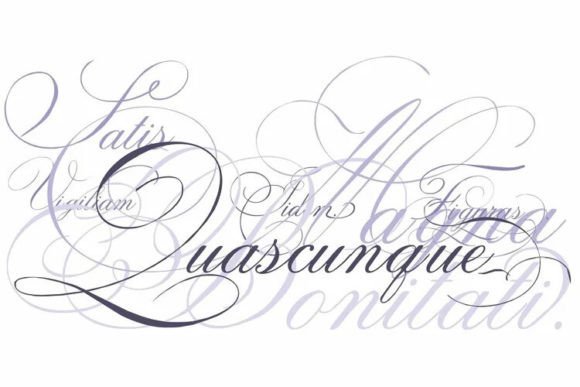
However, the real magic lies in the details. The font features "paragraph versals" in an Old English script. In typography, a versal is a large initial letter used at the start of a section. By offering these in an Old English style, the font allows you to create that classic illuminated manuscript look where a bold, heavy letter anchors the lighter, flowing text that follows. It creates an immediate visual hierarchy that draws the eye and signals to the viewer that what they are reading is important.
Then, there are the flourishes. We aren't talking about a single decorative swirl here. This typeface includes hundreds of glyphs—over 800, in fact. This massive library includes dozens of versals for each alphabet letter and a vast collection of flourishes designed specifically for the beginnings of paragraphs or chapters. These aren't random doodles; they are designed to mimic the ink flow of a flexible dip pen, with varying line weights that taper off naturally. If you are working on a project that requires a "perfect ancient document" look, these assets are invaluable for filling empty space and adding a sense of grandeur without cluttering the design.
Practical Applications for Modern Branding
While the font is rooted in history, its applications are incredibly relevant to modern marketing and design. In a digital landscape saturated with clean, geometric sans-serifs, using a rich, textured script like this can make a brand feel more human, artisanal, and trustworthy.
- Logo Design and Brand Identity: For businesses in the hospitality, legal, spirits, or artisanal sectors, a logo needs to convey heritage. Using the Indenture English Penman as a primary wordmark or as part of a monogram can instantly establish a brand as established and sophisticated. It suggests that the brand values tradition and craftsmanship.
- Packaging Design: Imagine this font on a bottle of craft gin, a jar of small-batch jam, or a high-end chocolate bar. The script adds a tactile quality to the label, making the product feel expensive and hand-crafted. The flourishes can be used to frame the product name or highlight "Est. 1880" style dates.
- Editorial and Print Layouts: In magazines or book covers, particularly for genres like historical fiction, mystery, or romance, this typeface does the heavy lifting of setting the mood. It is perfect for chapter headings or drop caps, providing a visual break from body text and enhancing the storytelling experience.
- Invitations and Stationery: For wedding planners and event designers, this font is a dream. It offers the look of custom calligraphy without the cost of hiring a hand-lettering artist for every single invitation. It works beautifully for formal events, vintage-themed parties, and high-end stationery sets.
Mastering the Glyphs: A Designer’s Workflow
One of the biggest hurdles with complex, feature-rich fonts is knowing how to access all the hidden gems. Because Indenture English Penman contains over 800 glyphs, simply typing on your keyboard won't unlock its full potential. You will only see the standard A-Z and punctuation. To truly elevate your work, you need to access the OpenType features and alternate character sets.
The most effective way to utilize this resource is through the Glyphs panel in design software like Adobe Illustrator, InDesign, or Photoshop. If you are a designer or a serious hobbyist, getting comfortable with this panel is a game-changer.
Here is a practical approach to using the font effectively:
- Type Your Base Text: Start by typing out your header or title using the standard characters. This gives you the basic structure.
- Open the Glyphs Panel: In Illustrator, go to Type > Glyphs. This will bring up a visual map of every single character available in the font file.
- Swap and Customize: Highlight a specific letter (like the first letter of a name) and look at the Glyphs panel. You will likely see dozens of variations for that letter—some with swirls, some in Old English style, some with different connections. Click on one to swap it in.
- Adding Flourishes: Don't treat the flourishes as part of the text flow. It is often better to place a flourish as a separate text object so you can scale it, rotate it, or change its color independently. This allows you to wrap flourishes around your main text or use them to balance the composition of a logo.
By manually selecting these alternates, you avoid the "digital font" look where every 'e' looks identical. You create a custom piece of lettering that feels hand-drawn and unique to your specific project.
Pairing and Readability: Striking the Balance
Because Indenture English Penman is a highly decorative display font, using it for body copy is generally a bad idea. At small sizes, the intricate details of the roundhand script and the flourishes can turn into a muddy blur, hurting readability. This font is designed to be the star of the show in headlines, logos, and titles.
To make it work, you need a strong supporting cast. This is where font pairing becomes critical. You need a typeface that complements the vintage vibe without competing for attention.
- Pair with a Clean Serif: For a classic, bookish look, pair the script with a traditional serif font like Garamond or Baskerville. The serifs will bridge the gap between the old-fashioned script and modern readability.
- Pair with a Neutral Sans-Serif: For a more contemporary contrast, use a clean sans-serif like Helvetica, Roboto, or Open Sans. This creates a "high-low" dynamic where the historical script adds flair to a modern, grid-based layout. This works exceptionally well for web design and social media graphics where clarity is paramount.
When testing your pairings, pay attention to weight and x-height. Since the script has a lot of visual texture, you might want your secondary font to be slightly lighter or bolder to create separation. Always print out your designs or view them on mobile screens to ensure the "vintage" elements don't become illegible noise.
Commercial Considerations and Licensing
For small business owners and entrepreneurs, understanding the licensing of a premium font is just as important as the design itself. Fonts like Indenture English Penman are commercial assets. This means that while you can use them freely for your own internal mockups, using them in a product for sale (like a t-shirt, a logo for a client, or a digital template) requires a valid license.
Before finalizing a project, review the specific license terms provided with the font. Most premium fonts have different tiers:
- Desktop License: Usually covers installation on your computer for creating static images (logos, print ads, packaging).
- Webfont License: If you want to use the font on a website, you often need a specific license that covers the traffic to your site.
- E-pub/Digital License: If you are creating a digital magazine or an eBook, check if this is covered.
Investing in the correct license protects you legally and supports the type designers who spend months researching historical documents and digitizing these complex letterforms. It ensures that high-quality, research-backed design assets continue to be available for creative professionals.
Conclusion
The Indenture English Penman typeface is more than just a collection of letters; it is a bridge to the past. It allows modern creators to harness the visual language of history to build brands that feel authentic, trustworthy, and deeply rooted in tradition. Whether you are designing a whiskey label, a wedding invitation, or a logo for a boutique law firm, this font provides the tools to create something that feels hand-crafted and significant. By mastering the Glyphs panel and pairing the script with the right modern typefaces, you can turn a simple design into a piece of visual storytelling that resonates with audiences looking for a touch of class in a chaotic digital world.