Drughard: The Typeface That Brings Gothic Intensity to Your Projects
There's a moment when a design calls for something more than just another clean, modern font. You're working on a horror film festival poster, creating merchandise for a black metal band, or developing branding for a haunted attraction—and suddenly, every serif and sans serif in your library feels too safe, too polished, too ordinary. This is exactly the kind of creative challenge that the Drughard typeface was built to solve.
A Font That Commands Attention Without Saying a Word
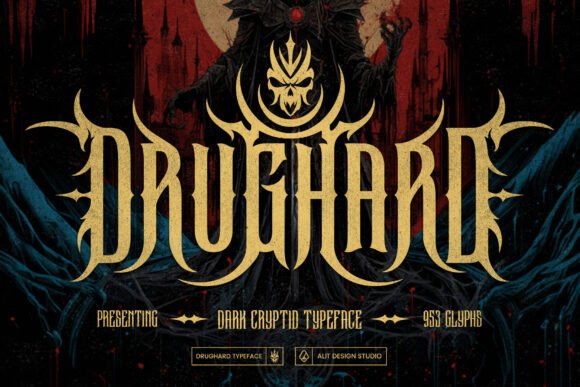
Drughard is a premium gothic-inspired display font that leans hard into dramatic, sinister aesthetics. Every letterform carries weight and presence, with intricate details that reward closer inspection. The strokes feel carved rather than drawn, with sharp angles and ornamental flourishes that evoke medieval manuscripts, Victorian-era engravings, and the visual language of classic horror.
What makes this typeface particularly interesting is how it balances complexity with cohesion. Individual letters are highly detailed—almost architectural in their construction—but when assembled into words and headlines, they create a unified visual rhythm. The characters interact with each other in a way that feels intentional rather than chaotic, which is a quality you don't always find in decorative display fonts.
The overall impression is one of darkness and mystery, but not in a cartoonish or exaggerated way. Drughard feels grounded, like something you might see etched into stone or burned into wood. That tactile quality gives it versatility across different creative contexts, from digital screens to printed materials.
Where This Typeface Truly Shines
Let's talk about practical applications, because a font is only as valuable as the projects it can elevate. Drughard's personality makes it a natural fit for certain creative niches, but it's more versatile than you might initially assume.
Music and Entertainment Branding is an obvious starting point. Metal bands, gothic rock groups, and dark ambient artists often struggle to find typography that matches their sonic identity without looking generic. Drughard offers enough character to stand out while remaining legible on album covers, tour posters, and band logos. Imagine it on a limited-edition vinyl sleeve or a festival lineup poster—the font does half the atmospheric work before anyone even reads the words.
Film and Event Posters benefit enormously from this kind of display font. Horror movie titles, haunted house promotions, Halloween events, and dark fantasy releases all need typography that sets a mood instantly. A single word set in Drughard can communicate genre, tone, and intensity faster than a paragraph of description. It's the kind of typeface that makes someone stop scrolling and pay attention.
Packaging Design for products with an edge—craft breweries with gothic branding, artisan candle makers with dark themes, specialty food products with mysterious branding—can use Drughard to create shelf presence. The key is using it strategically for product names and key messaging while pairing it with something simpler for body copy and regulatory information.
Social Media Graphics and Digital Content are where display fonts often prove their worth in everyday marketing. A YouTube thumbnail, an Instagram story, or a Twitch overlay featuring Drughard immediately signals a specific aesthetic to viewers. Content creators in the gaming, horror review, or dark fiction spaces can build visual consistency across their platforms by incorporating this typeface into their regular design templates.
Merchandise and Apparel designers know that typography sells. T-shirts, hoodies, patches, and stickers in the alternative fashion space rely heavily on bold, expressive lettering. Drughard's detailed construction means it reproduces well across different printing methods, from screen printing to embroidery to digital direct-to-garment processes.
Editorial and Publication Design for magazines, zines, and book covers in the horror, dark fantasy, or speculative fiction genres can benefit from a typeface like this. Chapter titles, pull quotes, and cover treatments become visual events rather than simple text elements. Publishers working in niche markets understand that the right typography signals genre expertise to potential readers.
Making It Work in Real Design Scenarios
Knowing a font looks impressive is one thing. Knowing how to actually use it effectively in a project is another conversation entirely. Here's some practical guidance for working with Drughard in your designs.
Start with hierarchy. Display fonts like Drughard are designed for headlines, titles, and short bursts of text—not for paragraphs. Use it where you want maximum impact: a logo wordmark, a poster headline, a website hero section title. Then pair it with a highly readable body font. A clean sans serif or a simple serif with good x-height works beautifully as a counterbalance. Think of Drughard as the lead vocalist and your body font as the rhythm section—both necessary, but serving different roles.
Test your pairings before committing. Set your headline in Drughard and your body copy in candidate fonts side by side. Look at the contrast in weight, style, and mood. You want enough difference that the hierarchy is clear, but enough harmony that they don't feel like they belong to different projects. Fonts with moderate contrast and open letter spacing tend to complement ornate display typefaces well.
Consider your color palette carefully. Highly detailed typefaces like Drughard can lose definition if set in colors that don't provide enough contrast. Dark text on light backgrounds works reliably. For reversed-out applications (light text on dark backgrounds), make sure the font size is large enough that the ornamental details remain visible and don't fill in at smaller scales.
Pay attention to spacing. Decorative fonts sometimes need manual kerning adjustments, especially in letter combinations where flourishes might create awkward gaps or overlaps. Spend a few minutes adjusting tracking and kerning in your headline text. This small investment of time makes a significant difference in the polished, professional appearance of your final design.
Review the full character set. Premium fonts like Drughard typically include more than just basic uppercase and lowercase letters. Look for alternate characters, ligatures, numerals, punctuation, and special characters. These extras give you more creative options and can help you customize the look of your typography for different applications. Some projects might benefit from stylistic alternates that soften or intensify the font's personality.
Strengthening Brand Identity Through Typography Choices
Typography is one of the most underrated tools in brand building. The fonts you choose become part of your visual identity system, working alongside color, imagery, and layout to create a recognizable presence. When a typeface like Drughard aligns with your brand's personality, it does more than look good—it reinforces recognition and builds consistency.
Think about how instantly recognizable certain brands have become through their typographic choices. The goal isn't to copy that approach but to understand the principle: consistent use of a distinctive font creates visual memory. When your audience sees that lettering style across your website, your social media, your packaging, and your print materials, they begin to associate it with your brand before they even read the words.
For businesses and creators operating in spaces where darkness, intensity, and dramatic aesthetics are part of the brand promise, Drughard offers a way to communicate that identity visually. It's not about being edgy for the sake of it—it's about choosing typography that authentically represents what you create and who you serve.
A Few Final Considerations
Before you incorporate any premium font into a commercial project, verify the licensing terms. Understand what the license covers—whether it's based on the number of users, projects, or installations. If you're working with clients, make sure the license permits the intended use, especially for merchandise or widely distributed materials. Keeping your licensing in order protects both you and your clients from potential issues down the road.
Also, remember that even the most striking display font is a tool, not a solution in itself. The best results come from thoughtful application—considering context, audience, medium, and message. Drughard gives you a powerful visual voice for projects that demand intensity and atmosphere. How you use that voice depends on the story you're telling.
If your creative work lives in the space where darkness meets craftsmanship—where every detail matters and mood is everything—this typeface deserves a place in your design toolkit. It's the kind of font that doesn't just display words; it transforms them into something you can almost feel.