Autumn in Philadelphia: A Font Duo with Rustic Soul
There’s a certain feeling you get when you walk through a historic neighborhood in the fall—the crisp air, the golden light, the sense of stories embedded in every brick and cobblestone. Capturing that specific warmth and authenticity in a design project can be a challenge, but it’s exactly the kind of atmosphere that great typography can evoke. Enter Autumn in Philadelphia, a thoughtfully crafted font duo designed to infuse your work with that same handcrafted, nostalgic charm.
More Than Just Letters: Capturing a Feeling
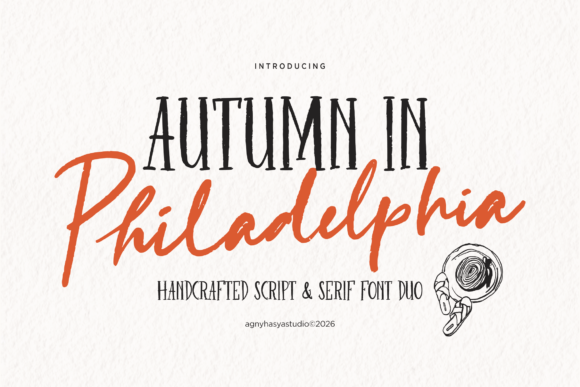
At its core, Autumn in Philadelphia is a pairing of two distinct personalities. First, there’s the organic handwritten script. Its strokes have a natural, flowing quality, as if written quickly with a felt-tip pen on kraft paper. It’s expressive and personal, perfect for adding a human touch to headlines, logos, or pull quotes. Then, there’s its companion: a rustic vintage serif. This isn’t your typical, formal serif typeface. The characters have a quirky, tall stature with subtle irregularities that suggest hand-setting or letterpress printing. Together, they create a dynamic contrast—the fluidity of the script against the structured, storybook quality of the serif.
This combination is what makes it such a versatile premium font for a wide range of creative projects. The script brings intimacy and elegance, while the serif provides readability and a strong, nostalgic foundation. It’s a font duo that doesn’t just sit on a page; it tells a story.
Where This Handcrafted Typeface Truly Shines
Understanding a font’s personality is one thing; knowing where to apply it is where the real value lies. Autumn in Philadelphia excels in projects where you want to convey authenticity, craftsmanship, and a cozy, curated aesthetic.
- Branding & Logo Design: For small businesses, especially those in the artisan food, boutique retail, or handmade goods space, this typeface can become the cornerstone of a brand identity. Imagine a logo for a neighborhood bakery, a craft brewery, or a specialty coffee roaster. The script could form the main brand name, while the serif handles the tagline or secondary information, instantly communicating a product made with care.
- Packaging & Product Labels: On a shelf crowded with sleek, minimalist designs, packaging that uses a handwritten font and a textured serif font stands out. It tells a customer that the product inside is likely small-batch, locally sourced, or family-made. Think of labels for jams, candles, soops, or artisanal spirits.
- Print & Editorial Layouts: While it might not be for body text in a newspaper, this font duo is fantastic for editorial design. Use it for chapter titles in a cookbook, for headlines in a lifestyle magazine, or for the cover of a self-published novella. It adds a layer of artistic character that standard fonts lack.
- Digital Presence & Social Media: In the realm of web design and social media graphics, consistency is key. Using Autumn in Philadelphia for your Instagram post quotes, Pinterest pin titles, or website banners can create a recognizable, cohesive look across platforms. It helps your content feel more personal and less generic, which can boost audience engagement.
- Invitations & Merchandise: From wedding stationery with a rustic theme to event posters for a local harvest festival, the font’s nostalgic vibe is a natural fit. It also translates beautifully onto merchandise like tote bags, mugs, or t-shirts for brands that want to sell an experience, not just a product.
Making It Work: Practical Tips for Designers and Creators
Having a beautiful design asset is just the start. Using it effectively requires a bit of strategy. Here’s how to get the most out of a font like this.
Prioritize Readability. The script portion is stunning, but its primary role is for display. Use it for short, impactful text—a headline, a logo, a call-to-action button. For longer paragraphs or essential information like addresses or ingredients, lean on the vintage serif or pair the duo with a clean, neutral sans-serif font for body copy. This ensures your design is both beautiful and functional.
Test Your Pairings. While the two styles in the duo are designed to work together, don’t be afraid to experiment. Try using the serif alone for a more subdued, classic look. Or pair the script with a simple sans-serif for a more modern take on the handcrafted feel. Always view your typography in context—mock it up on a business card, a website header, or a product label to see how it feels in its intended environment.
Understand the Licensing. Before using any commercial font, always review the license. Autumn in Philadelphia, like other quality typefaces, comes with specific terms that dictate how you can use it—whether for a single client project, unlimited personal work, or merchandise for sale. Respecting the license protects both you as the creator and the font designer.
Let It Guide Your Design Choices. A font with this much personality can help direct the entire visual language of a project. Its rustic, warm nature pairs well with earthy color palettes (think burnt orange, mustard yellow, deep cream, and forest green), natural textures like linen or recycled paper, and photography with a soft, warm filter. Let the typeface inspire your other design elements.
A Thoughtful Tool for Authentic Communication
In a digital landscape often dominated by crisp, impersonal geometry, choosing a typeface like Autumn in Philadelphia is a deliberate act. It’s a choice to prioritize warmth over coldness, story over sterility, and human touch over machine perfection. It’s not about being the loudest voice in the room, but about speaking in a tone that resonates on a deeper level with your audience. For the designer looking to build a brand with soul, the small business owner crafting a loyal community, or the creator telling meaningful stories, this font duo offers a powerful and evocative way to communicate. It’s a tool that doesn’t just spell out words—it helps you craft an experience.